
For a small business, being good at what you do is only part of the equation. Customers also need to find you, recognize you, trust you, and understand why they should choose you over the competition. That is where digital marketing comes in.
Today, much of the customer journey happens online. People search Google when they need a service, look at a company's website before making contact, read reviews, compare businesses, browse social media, and increasingly use AI-powered search tools to find recommendations and answers. If your business isn't visible where your customers are looking, you can miss opportunities before you ever get the chance to talk to them.
Digital marketing gives small businesses the tools to build that visibility and create a stronger connection with potential customers. And unlike traditional marketing, digital marketing can be measured, adjusted, and tailored to specific audiences and goals.
Your Customers Are Already Searching Online
One of the biggest reasons digital marketing matters is simple: your customers are already online.
Someone looking for a local dentist might search for "dentist near me." A homeowner may search for "landscaping company in Toledo." A business owner might search for "website designer in Bowling Green, Ohio." Someone considering a major purchase may spend days researching their options online before ever contacting a company. These searches represent opportunities.
Your business doesn't necessarily need to be the biggest company in your industry to compete for them. But you do need an online presence that clearly communicates what you offer and gives potential customers enough information to take the next step. That might mean finding your website in search results, seeing your Google Business Profile, reading positive reviews, finding a helpful blog article, or recognizing your brand from another interaction they've had with your business.
Digital marketing helps make those interactions possible.
Your Website Is the Foundation of Your Online Presence
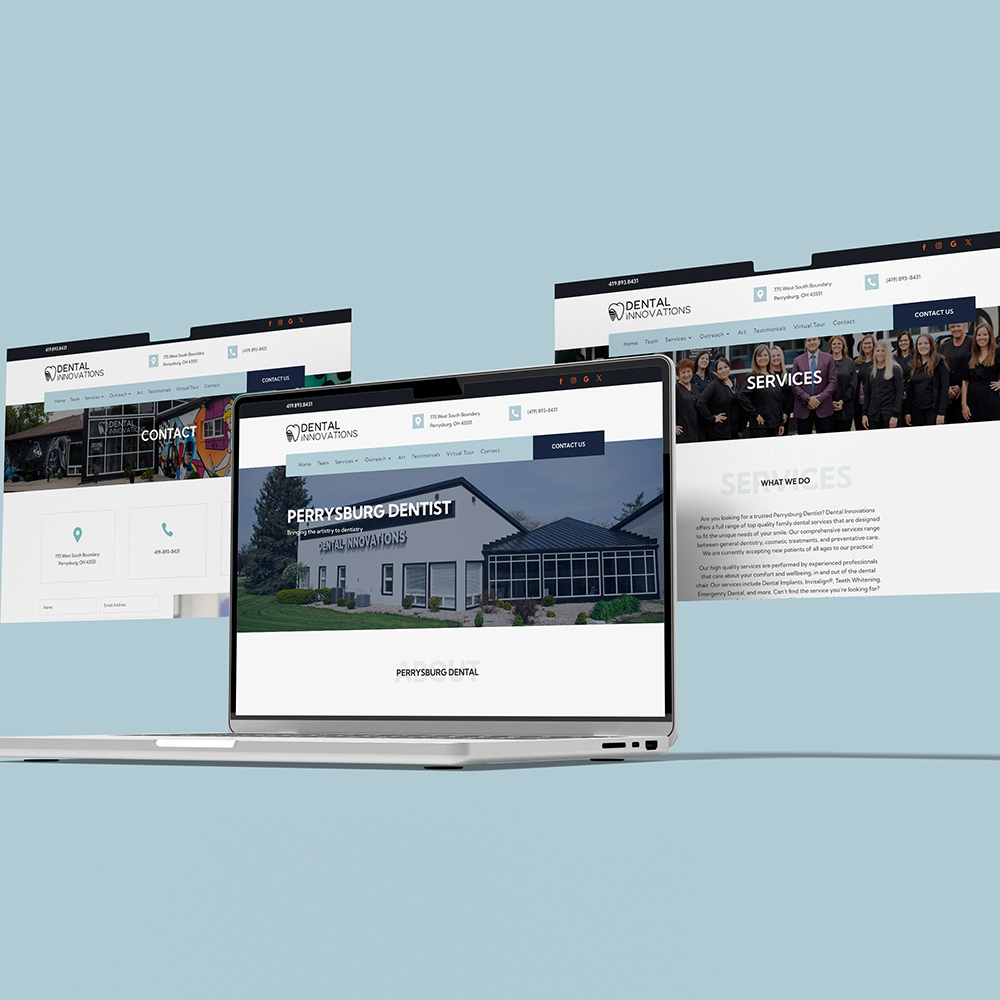
Even with all the different digital channels available today, your website remains one of the most important pieces of your marketing strategy. Your website gives potential customers a place to learn about your business on your terms. It can explain your services, showcase your work, answer common questions, establish credibility, and make it easy for someone to contact you. It also provides the foundation for many of your other marketing efforts.
Someone might discover your business through Google, click on an advertisement, find you through a directory, or see one of your social media posts. In many cases, the next step is visiting your website. If that website is outdated, difficult to navigate, slow, confusing, or doesn't work well on mobile devices, you may lose the customer even though your marketing successfully brought them there.
That is why website design and digital marketing should work together. Getting someone to your website is only part of the job. The website needs to give them a reason to stay.
Being Found on Google Matters
For many small businesses, Google is one of the most important places to be visible.
Search engine optimization helps your website communicate with search engines and improve its ability to appear when people search for relevant information, products, or services.
For local businesses, local SEO is especially important. A company serving Bowling Green, Ohio, for example, should make it clear to both search engines and potential customers that it serves that area. Businesses serving Toledo, Perrysburg, Findlay, Fremont, or other communities can similarly benefit from establishing clear geographic relevance throughout their online presence. But SEO isn't simply about adding a city name to a page.
Search engines need to understand what your business does, which services you provide, who you serve, and how your information connects across your website and other online platforms. That means useful service pages, informative content, technical website improvements, accurate business information, internal links, and other SEO considerations all have a role to play.
And search itself is changing. People are increasingly asking longer, conversational questions through search engines and AI-powered tools. Creating clear, genuinely useful content gives your business more opportunities to demonstrate its expertise and provide the information these systems need to understand your business.
Your Google Business Profile Can Influence Local Customers
For businesses that serve a specific geographic area, your Google Business Profile is another important part of your digital presence. When someone searches for a business or service locally, they may encounter Google Maps or a local business listing before they ever visit a company's website.
Your profile can provide important information such as your business name, location, hours, phone number, website, services, photos, and customer reviews. That first impression matters. Accurate information makes it easier for customers to contact you. Current photos can give people a better sense of your business. Reviews can provide social proof. Regular updates can help keep your profile active and informative.
Your Google presence and website should also support one another. Consistent business information across your website, Google Business Profile, and online directories helps create a more trustworthy and understandable digital footprint.
Digital Marketing Builds Trust Before the First Conversation
A potential customer doesn't always call the first business they find. They may compare several companies first.
- What does the website look like?
- Does the business appear established?
- Are the services clearly explained?
- Are there reviews?
- Does the company have recent photos?
- Can I find answers to my questions?
- Does this business seem like it understands what I need?
These questions are often answered before a salesperson, receptionist, or business owner ever gets involved. That's why digital marketing isn't just about visibility. It is also about credibility.
Professional branding, helpful content, a well-designed website, accurate Google information, positive reviews, and a consistent online presence can all contribute to the impression your business makes. You don't have to look like a massive corporation. In fact, small businesses often have an advantage in being personal and approachable. Your digital presence should simply reflect the quality and professionalism you want customers to associate with your business.
Digital Marketing Helps Small Businesses Compete
Small businesses sometimes assume they cannot compete with larger companies because they don't have the same marketing budget. But digital marketing can create opportunities to compete more strategically.
A small business can focus on specific services, geographic areas, audiences, and customer needs rather than trying to reach everyone. A local contractor may focus on homeowners within its service area. A specialty healthcare practice may create content around the questions its patients commonly ask. A photographer may build visibility around a particular type of photography and the communities they serve.
This type of focused marketing can be more useful than trying to appeal to everyone at once. You don't necessarily need the biggest audience. You need to reach the right audience. That is one of the biggest advantages digital marketing provides small businesses: the ability to build a strategy around the customers they actually want to reach.
Helpful Content Gives Customers a Reason to Find You
Not everyone who encounters your business online is ready to buy immediately. Some people are still researching. This is where content marketing can become an important part of digital marketing. A business can use its website and blog to answer questions, explain services, address common concerns, provide helpful advice, and demonstrate industry knowledge.
For example, a dental practice might publish an article explaining when a toothache requires emergency dental care. A landscaping company could explain how Ohio's changing seasons affect lawn care. A marketing agency might explain what a Google Business Profile does or how a business can determine whether its website needs a redesign.
This type of content serves multiple purposes. It helps customers make informed decisions, gives search engines more context about your expertise, and creates additional opportunities for your business to appear in organic search results. Over time, a useful collection of content can become a valuable asset that continues attracting people to your website.
Digital Marketing Gives You the Ability to Measure and Improve
Another major advantage of digital marketing is that you don't have to rely entirely on guesswork. Depending on the strategy you're using, you can monitor things such as website traffic, search visibility, phone calls, form submissions, advertising conversions, Google interactions, and other indicators of customer engagement. This doesn't mean every number tells the whole story.
For example, SEO and content marketing can take time to produce meaningful results, while branding may influence a customer's decision without being directly responsible for the final conversion. But having data available gives you a better foundation for making decisions.
Instead of asking, "Are we marketing enough?", you can start asking better questions:
- Are we reaching the right people?
- Are customers finding us?
- What are they looking for?
- Which marketing efforts are generating opportunities?
- Where are potential customers dropping off?
Those answers can help you refine your strategy over time.
Your Digital Marketing Strategy Should Grow With Your Business
Your business isn't static, so your marketing shouldn't be either. A new business may initially need to establish its branding, build a professional website, and create visibility on Google. Once those foundations are in place, the business might focus more heavily on SEO, content, advertising, or expanding into new markets.
An established company may discover that its website no longer reflects its services. Another business may be ready to target a new city or customer base. Changes in search behavior and technology may also create new opportunities.
Digital marketing gives you the flexibility to adjust as those needs change. The goal isn't to constantly chase the newest platform or marketing trend. It's to build an online presence that can adapt as your business, customers, and the digital landscape evolve.
Creating a Digital Marketing Strategy That Makes Sense for Your Business
Digital marketing can feel overwhelming because there are so many different options. You don't necessarily need to be active on every social platform, publish a blog every week, run multiple advertising campaigns, and completely overhaul your website at the same time. Start with your business goals.
What are you trying to accomplish? Do you need more local customers? More leads? Greater awareness? A stronger brand? Better visibility in search? Customers from a new service area?
Once those goals are clear, you can determine which digital marketing channels are most likely to help you get there. For some businesses, that may mean strengthening the website and SEO foundation. For others, Google Ads may provide a faster way to reach high-intent customers. Another business may need to establish a cohesive brand before expanding its marketing efforts.
Good digital marketing isn't about doing everything. It's about doing the right things well.
Digital Marketing Is an Investment in Your Business
For small businesses, marketing can sometimes feel like an expense that competes with everything else on the budget. But when approached strategically, digital marketing is an investment in your business's ability to be discovered and chosen.
Your website can continue representing your business around the clock. Your SEO can build visibility over time. Your Google presence can help local customers find you. Your content can answer questions before someone contacts you. Your branding can help people remember you. Your advertising can put your business in front of customers when they're actively searching.
These pieces can work together to create something much more valuable than a collection of individual marketing tasks: a digital presence that supports your business as it grows.
Building a Stronger Digital Presence With Bizzybee Marketing
At Bizzybee Marketing, we believe digital marketing should be customized around the business, not built from a one-size-fits-all checklist.
Based in Bowling Green, Ohio, Bizzybee Marketing works with small businesses and organizations in Northwest Ohio and throughout the United States, helping clients strengthen their online presence through website design, SEO, branding, Google marketing, directory listings, content, and other digital marketing strategies.
Whether you're building a digital presence from the ground up, trying to improve an existing website, or looking for a more cohesive marketing strategy, the right starting point depends on your business, your customers, and your goals. The goal isn't simply to be online. It's to be visible, credible, useful, and easy to choose.
Ready to Strengthen Your Online Presence?
Your customers are already searching, researching, comparing, and making decisions online. The question is whether your business is positioned to be part of that journey. A thoughtful digital marketing strategy can help you reach the right audience, build trust, and create more opportunities for growth. Without wasting time and money on marketing that doesn't support your goals.
Ready to create a digital marketing strategy built around your business? Bizzybee Marketing can help.
0 Comments